Life Insurance Sector Posts Strong Q1: What Rising Premiums Mean for Policyholders in 2026
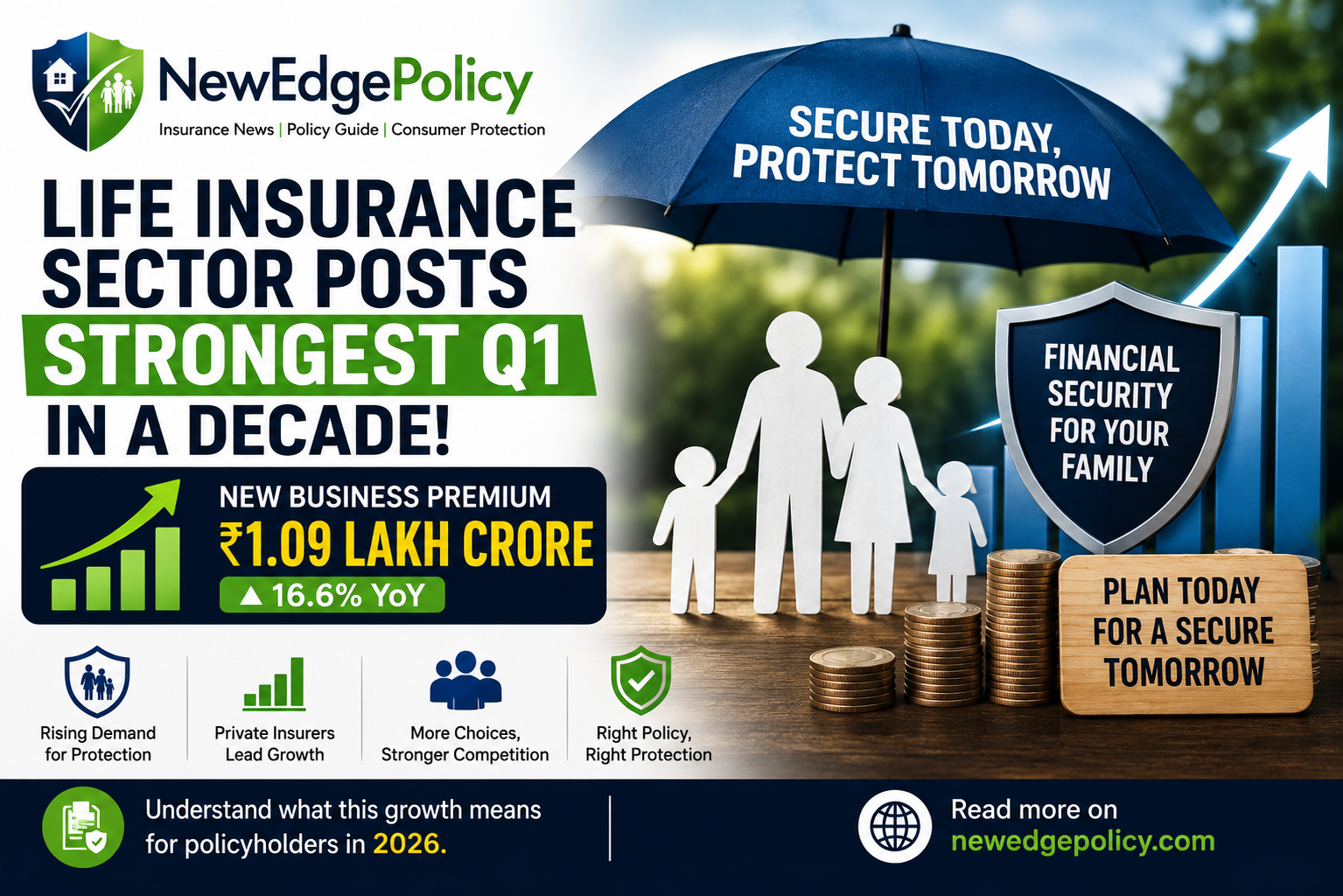
Quick Answer: India’s life insurance sector started FY2026-27 strongly, with new business premiums rising 16.6% year-on-year to ?1.09 lakh crore in the April-June quarter. Private insurers grew faster than LIC, increasing their share of the market to nearly 40%.
Life Insurance Demand Shows Strong Growth
The strong first-quarter performance indicates continued demand for life insurance across both retail and group segments. According to CareEdge Ratings data, new business premiums increased 16.6% compared with the same period last year.
Private life insurers were the biggest growth drivers. Their new business premium increased 27.5% to ?43,522 crore, compared with 10.3% growth for LIC, whose new business premium reached ?65,548 crore.
LIC nevertheless remained the dominant player, accounting for around 60% of industry new business premium during the quarter.
LIC Reports Strong Q1 Performance
LIC also reported a significant improvement in its profitability for Q1 FY27. Its profit after tax increased 22.81% year-on-year to ?13,492 crore, while Value of New Business (VNB) rose 61.32% to ?3,136 crore.
Its VNB margin increased by 750 basis points to 22.9%, indicating a stronger contribution from higher-margin products. LIC's total premium income also increased 6.75% to ?1.27 lakh crore.
What Is Driving the Growth?
The industry's growth is being supported by steady demand for retail insurance products, stronger regular-premium collections and a recovery in group business.
Private insurers have particularly benefited from demand for regular-premium products. Their faster growth is also increasing competition in a market where LIC has traditionally held a dominant position.
For consumers, greater competition can mean more choice in terms of protection, savings, annuity and other life insurance products.
Does Strong Industry Growth Benefit Policyholders?
Higher premium collections do not automatically mean lower premiums or better returns for customers. However, stronger competition can encourage insurers to improve products, distribution and customer service.
Policyholders should therefore avoid choosing a life insurance plan simply because an insurer is reporting strong financial growth. The more important factors are the amount of life cover, policy duration, exclusions, premium commitment, surrender conditions and the financial strength of the insurer.
What Should Buyers Look For in 2026?
Consumers considering life insurance should first determine how much protection their family would actually need. A pure term insurance policy can be suitable for those primarily seeking financial protection, while savings or participating products have different objectives and costs.
Before purchasing, compare benefits and exclusions, understand the premium payment period and check what happens if premiums are missed. Buyers should also read the policy document carefully rather than relying solely on illustrations or sales pitches.
The Bigger Picture
India's life insurance industry has entered FY27 with strong momentum. Private insurers are growing rapidly, while LIC continues to maintain its market leadership and has reported significant improvement in its Value of New Business.
For policyholders, the expanding market means more options but also makes careful comparison increasingly important. Strong industry numbers are encouraging, but the right life insurance policy should ultimately be selected based on the customer's protection needs and long-term financial goals.
Disclaimer: This article is for informational purposes only and does not constitute financial or insurance advice. Policy terms, benefits and premiums vary between insurers. Readers should review official policy documents and consult the insurer or a qualified financial professional before making an insurance decision.
Disclaimer: This article is for informational purposes only and does not constitute financial or insurance advice. Insurance products are regulated by the Insurance Regulatory and Development Authority of India (IRDAI). Policy terms, premiums, and coverage vary by insurer. Please consult a licensed insurance advisor before purchasing any policy. Read our full disclaimer →